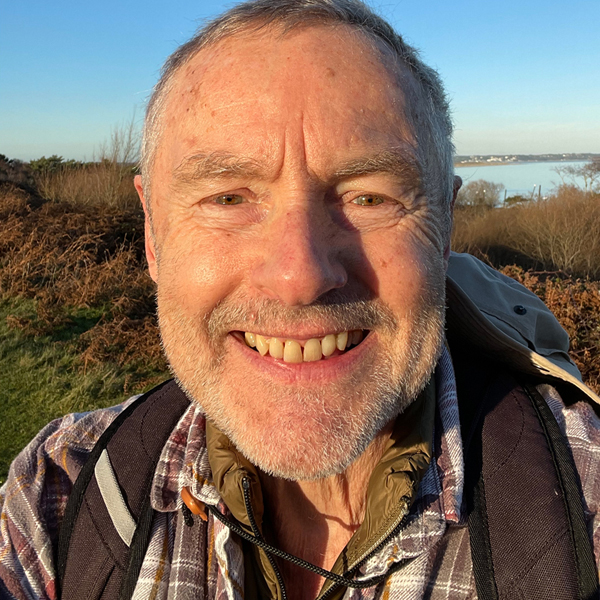
January 2022
J. ANDREW ROSS
WRITER AND PHILOSOPHER
1949–1969
Poole: School
I was born in November 1949 in southern England. My father was from Northumberland, and worked as an engineer. My mother was from Yorkshire, and worked as a secretary. I have a sister, who is two years younger than me. When I was still too young to remember, we moved to Poole, Dorset, on the south coast of England, where I lived until 1969.

Poole Harbour
 |
 |
| My father circa 1949 |
My mother circa 1949 |
 |
 |
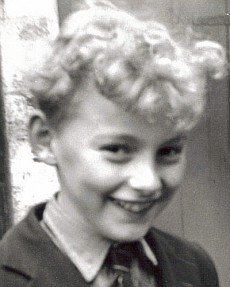
| Me circa 1961 | My sister circa 1967 |
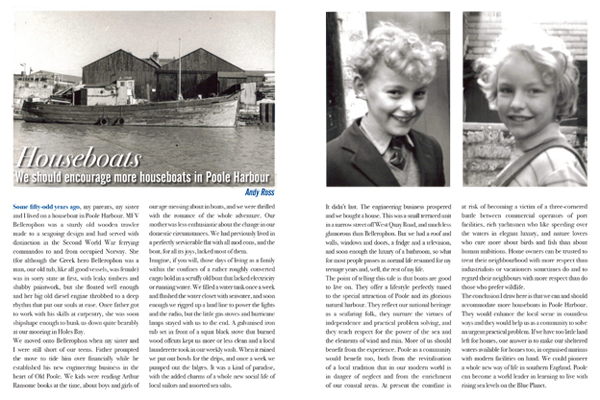
The family spent the year 1959/60 living on a houseboat moored in Poole Harbour.
This article about it was published in Harbour Times, February 2015.
From the age of 11 to the age of 19, I was a pupil at Poole Grammar School.
There I sat Ordinary-level exams (three in 1965, five in 1966), Advanced-level exams (1968),
and the Oxford entrance exam (also 1968).

Poole Grammar School prefects, 1968
From 1966 to 1968, I earned pocket money by working as a stockroom boy at Woolworths on Saturdays.
In the summers of 1966 and 1967, I worked as a seaside seller of tea and ice-creams for the Bournemouth Beach Catering corporation. I developed an interest in motorcycles, and rode and restored a pair of old British bikes, first a BSA Bantam and then a Triumph Tiger Cub.
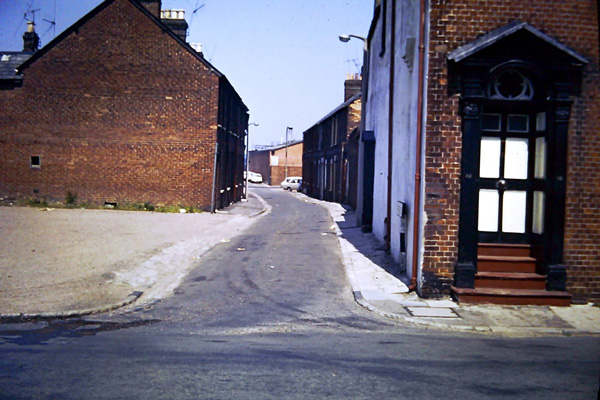
During my teenage years the family lived in this street
My school career ended quite well:
| Subject | Level | Grade |
| Pure Mathematics | Advanced | A |
| Applied Mathematics | Advanced | A |
| Physics (+ practical) | Advanced | A+A |
| Pure Mathematics | Special | Credit |
In the summer of 1968, the school sent me as its delegate to an international young scientists' congress in London. In December 1968,
I was awarded the Stapledon Exhibition to read Physics at
Exeter College Oxford.
For the first half of 1969, I worked as a bus conductor for the Hants and Dorset Omnibus Company.
I also bought an old car, a Renault Dauphine, and learned to drive.
In the long, hot summer, two other Oxbridge-bound schoolfriends and I hitch-hiked around Europe. We were on a ship in the Adriatic as we first saw Apollo astronaut Neil Armstrong on the Moon.
1969–1972
Oxford: Undergraduate
In October 1969, I matriculated at the University of Oxford. I studied for three years at
Exeter College Oxford. I cultivated a hippy biker look and read a lot of big novels.
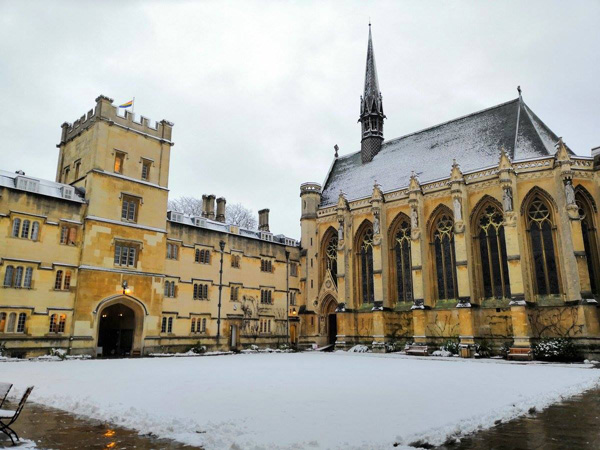
Exeter College, Oxford, front quad in snow
In 1970, I joined the Oxford University branch of the United Nations Association and helped to organize a student rock music club called Stonehenge. In the summer, I took Second Class Honour Moderations in Physics and Philosophy, then returned to Poole to work as a laborer in a steel factory. In the fall, I changed my major to Philosophy, Politics and Economics (PPE), with an emphasis on philosophy. For my 21st birthday, I bought myself a typewriter, an Imperial Olympia.
In early 1971, I met a fellow student called Judy. We went on to spend the next four years together. They were very good years. Judy studied PPE too, with an emphasis on politics.
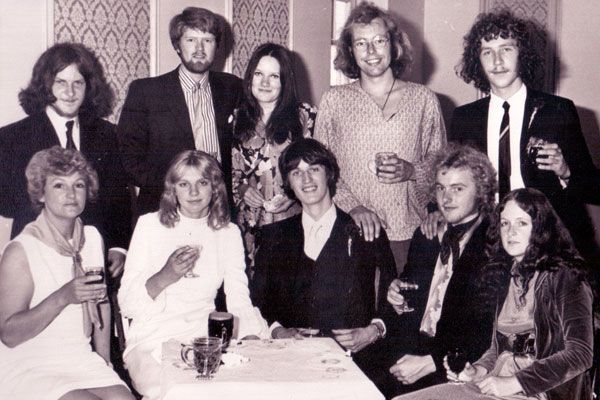
Group photo at Poole schoolfriend's wedding, 1971
Clockwise from top left: schoolfriend Paul, unk, unk, schoolfriend Steve, schoolfriend Graham,
my Oxford girlfriend Judy, me, schoolfriend Singo and his new wife, my mother
In 1972, after elective study in the philosophy of mind and the respective philosophies of Immanuel Kant (mainly Kritik der reinen Vernunft) and Bertrand Russell plus Ludwig Wittgenstein (from Principia Mathematica to the Tractatus Logico-Philosophicus), I was awarded Second Class Honours. I won a Leverhulme Studentship to study for a two-year Master's degree in Logic and Scientific Method in the department founded by Karl Popper at the London School of Economics and Political Science.
1972–1974
London: Graduate
In autumn 1972, I started work at the London School of Economics. The head of department was Imre Lakatos, who had developed a Popperian philosophy of mathematics and science. I studied Quine's works in depth and enjoyed the buzz around the works of Noam Chomsky and Saul Kripke.
In 1973, I did some part-time lecturing on Fundamental and Integrative Studies in the Department of Accounting and Finance at the North East London Polytechnic. My own studies began to focus on Hegel and set theory. I envisioned the closure of the cumulative hierarchy of sets into a strange loop analogous to the looping of dialectical hierarchies in Hegeliana.
In 1974, I completed my Master of Science studies:
Papers:
Advanced Scientific Method
Elements of Mathematical Logic
Philosophy of Mathematics
Thesis (distinguished): Logical Foundations for Probability Theory
Carnap semantics for inductive logic and Kripke semantics for modal logic are used to build a
logical foundation for probability theory.
In the summer of 1974, Judy and I traveled to Berlin. I taught English as a Foreign Language and also worked my way through Hegel's masterpiece, Phänomenologie des Geistes, in German and English.
Later in the year, I was
awarded the Master of Science degree in Logic and Scientific Method
from the University of London.
1974–1977
Oxford: Postgraduate
In October 1974, I returned to the University of Oxford to pursue postgraduate studies.
I was awarded an Amelia Jackson Studentship from Exeter College and studied for a
Bachelor of Philosophy degree in Philosophy.
In 1975, I wrote a draft book entitled Dialectical Logic. In it, I discussed the logical open-endedness of propositional logic, predicate logic, arithmetic, set theory, and truth theory.
In 1976, I completed my Bachelor of Philosophy studies:
Papers:
Original Authorities for the Rise of Mathematical Logic
Philosophy of Mathematics
Social and Political Philosophies of Hegel and Marx
Thesis : Truth and Provability
An open-ended sequence of restricted logical calculi is applied to arithmetic and set theory to
accommodate the problems of self-reference illustrated by Gödel's incompleteness theorem.
I was awarded a distinction. Robin Gandy at the Mathematics Institute had been
my tutor for mathematics in 1974–75. Crispin Wright at All Souls College was my
tutor for philosophy in 1975–77. The Oxford Bachelor of Philosophy degree is
worth somewhat more than a Master of Philosophy degree elsewhere and is
considered a sufficient and final qualification for teaching philosophy.
I spent
the summer reading Iris Murdoch novels.
In the academic year 1976–77, I continued my studies at Oxford, now registered
for a Doctor of Philosophy degree, and did part-time work as a tutor in logic
and philosophy at St. Anne's College Oxford. I wrote another draft of my book
Dialectical Logic. The argument now culminated in a new, open-ended,
evolutionary theory of facts that unfolded in a constructive universe where time
was realized layer by layer behind a moving present moment.
I decided to join the Civil Service as an Administration Trainee.
I was posted to the Ministry of Defence
in central London.
1977–1981
London: Employee
In October 1977, I started work at the Ministry of Defence in London.
My work
there is subject to the Official Secrets Acts.
I submitted my draft of Dialectical Logic as a doctoral thesis and was
examined on it in June 1978.
My examiners were John Bell and Daniel Isaacson.
They invited me to resubmit a revised draft.
To make time to
do so, I resigned from the Ministry.
In early 1979, I wrote a quick novel called Fireball. It was a ripping yarn,
utter nonsense but fun.
In the coming months a succession of publishers politely
rejected it.
I returned to London and got a job as an advertising representative for the journal Electron, published by the International Publishing
Corporation. While there, I also wrote for their journal
Data Processing. I
resigned to write my thesis anew in late 1979.
In early 1980, I submitted the thesis. I did temporary work for the
Institute of Administrative Accounting and Data Processing in London. I moved
back to Oxford and took a short course in teaching English as a Foreign Language
at the Oxford Intensive School of English, then spent the summer teaching at the
school. My thesis examiners were
Edward Craig and Michael Inwood. They accepted my thesis Dialectical
Logic for the degree of Master of Letters.
In September 1980, I moved back to London and started work as a tutor of
Advanced-level Physics at the Davis, Laing and Dick Tutorial College in Notting
Hill Gate.
In November 1980, at the University of Oxford degree ceremony at the Sheldonian
Theatre in Oxford,
I was formally awarded certificates for the following
degrees:
Master of Arts
Bachelor/Master of Philosophy
Master of Letters
1981–1987
From Japan to Germany
In summer 1981, I flew to Japan. For a year, I taught English as a Foreign
Language at the Green English Conversation School, based in Shizuoka City. While
there I worked through all three volumes
of the Feynman Lectures on Physics.
Refreshed, I returned to England in the summer of 1982.
In January 1983, I started work as a tutor of A-level physics and mathematics
for Lansdowne Tutors,
a small college based in London. For the first 18 months I
worked as a housemaster at their
residential campus in Woking.
 |
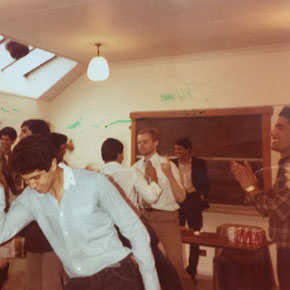 |
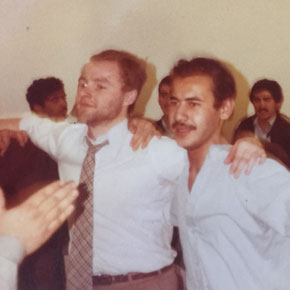
| With Lansdowne students, Woking, December 1983 | |
In the summer of 1984, I moved back to London, as a housemaster at a Lansdowne
residential college in Kensington. During the day job with A-level students from
all over the globe, I was in charge of the physics lab. Then I moved to the
Lansdowne dormitory in Notting Hill Gate.
In early 1986, to become more independent, I moved out, first to Crouch End in
east London, and then to Putney in southwest London. I wrote a draft novel
entitled Made in Japan.
In the second quarter of 1987, to have a fresh record of my academic standing, I
sat the
U.S. Graduate Record Examination in London:
| Test | Score | Percentile |
| Verbal | 790 | 99 |
| Quantitative | 800 | 99 |
| Analytical | 700 | 92 |
| Physics | 890 | 94 |
Soon afterward, I was offered the financed opportunity to study for a Ph.D. at Stanford University in California, but just a few days before the offer arrived I had accepted a job in Heidelberg, Germany.
1987–1998
Heidelberg, Germany
In June 1987, I moved to Germany. I started work as the promotion editor for physics and economics books and journals at the academic publisher Springer-Verlag based in Heidelberg. I promoted new products by planning and writing brochures and newsletters and serving at conference exhibitions.
I
studied German in evening classes at the local Volkshochschule. In spring 1988, I
was awarded the ICC/Goethe Institut Zertifikat Deutsch als Fremdsprache with the
top grade (sehr gut).
Over Christmas/New Year 1988–89, I traveled to New York to see the sights. I
stayed in a smart penthouse apartment on the lower East Side and visited the
Springer offices. In 1989, I published an article entitled "Springer's Tower of
Power" in the Springer New York magazine Springboard.
Later in 1989, within Springer-Verlag, I moved to the computer science editorial
department. There, essentially as a copy editor, I helped academic authors and
editors to get their books together. This was mostly a matter of language and
presentation, though sometimes I helped sort out technical details. I stayed in the department for almost a decade. My senior colleague in the department was
Dr. Hans Wössner, who had studied at the Munich Institute of Technology under
Professor
Dr. Dr. h.c. mult. Friedrich L. Bauer.
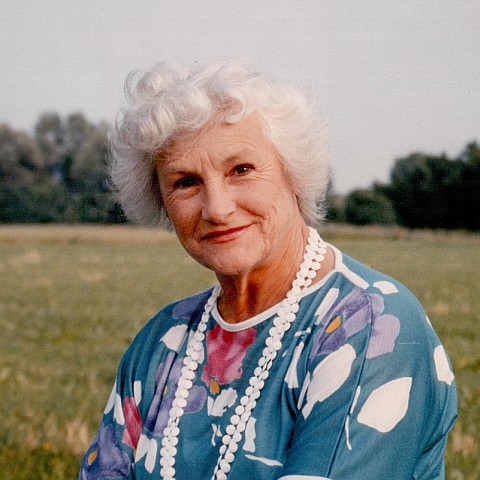
My mother, Ulm, July 1990
In 1991, I published The Globall Hyperatlas — a development proposal in the
Computer Graphics Society journal The Visual Computer. This was an idea for an
electronic globe consisting of a fixed glass sphere mounted like a lightbulb on
a baseplate and lined with a few million pixels. Online, with the right software, it would show
interactive real-time images of the Earth from space or thematic global maps
with a zoom feature for close-ups and drilldowns.
From 1992, I managed and desk-edited new proceedings volumes in the NATO ASI
Series F
on computer and systems sciences, which included the NATO Special
Programme on
Advanced Educational Technology.
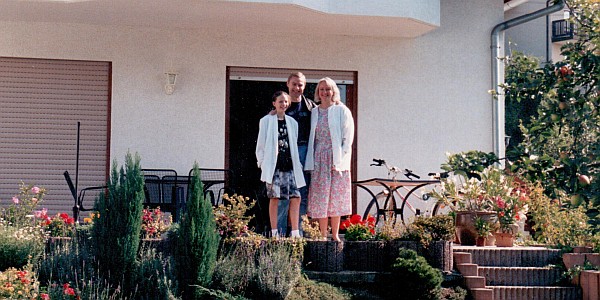
With visitors from England, August 1993
Since 1990, I had been working on a novel called
Lifeball. In 1993, I wrote an
800-page draft.
I commissioned sixteen hardback copies.
In 1994, I edited Lifeball down to some 500 pages and improved the style. I
made fifty paperback copies. A New
York agent tried to place it but gave up in early 1995.
In 1995, I revised Lifeball again, to create the 432-page paperback
edition that appeared in 1996.
A New York agent
tried to place it for a while, but again to no avail.
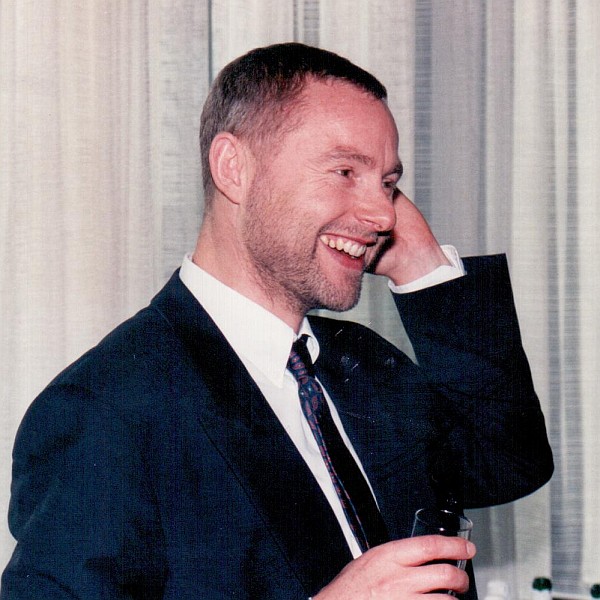
At a Springer party, late 1990s
A high point of my Springer years was my work from 1990 to 1992 on the
autobiography
The Computer — My Life of Konrad Zuse, who built computers
during and after World War II.
Another high point was the work in
collaboration with Professor Friedrich Bauer on his book
Decrypted
Secrets — Methods and Maxims of Cryptology.
In August 1997, at the suggestion of Springer author Alwyn Scott, I participated
at the Brain and Self Workshop held in Elsinore, Denmark, which was part of the
conference series Toward a Science of Consciousness sponsored by the Department
of Consciousness Studies at the University of Arizona.
In 1998, I joined the Association for the Scientific Study of Consciousness
(ASSC).
In June 1998, participated at the ASSC 2 conference, The Neural Correlates of
Consciousness,
Bremen, Germany.
The Springer directors did not take up my offer to focus on books and journals
devoted to consciousness studies. I accepted a documentation job at SAP.
1999–2009
Walldorf, Germany
In January 1999, I reported for work at SAP AG, in Walldorf, Germany. I was hired as an Information Developer in a department called Technical Core Competence (TCC) and was responsible, together with a few others, for editing, translating, writing, and coordinating technical documentation.
In April 2000, I took time off work to attend the conference Toward a Science of Consciousness, held in Tucson, Arizona. This was a magical experience. University of Arizona philosophy professor David Chalmers was the master of ceremonies and the presiding genius of the whole conference series.
Later in 2000, I moved with SAP Support to the new company campus at St.
Leon-Rot, south of Walldorf. I focused on preparing training
materials for courses held at SAP University.
In 2001, I became a certified support engineer and conducted remote EarlyWatch
Check sessions.
I learned to use the SAP
tools for technical authors and editors, and to work in the
SAP intranet.
In August 2001, I delivered a talk at the next Toward a Science of Consciousness
conference,
held in Skövde, Sweden.
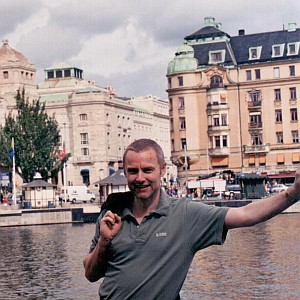
In Stockholm, Sweden, 2001
In April 2002, I attended the next Toward a Science of Consciousness conference,
again at Tucson, Arizona. I presented a poster. Soon after my return, I
wrote a review of recent books by Ted Honderich and Colin McGinn for the Journal
of Consciousness Studies (JCS).
At SAP in 2002, I took an active role in the creation of a new series of online
learning maps designed to enable consultants to train themselves on SAP products using multimedia materials.
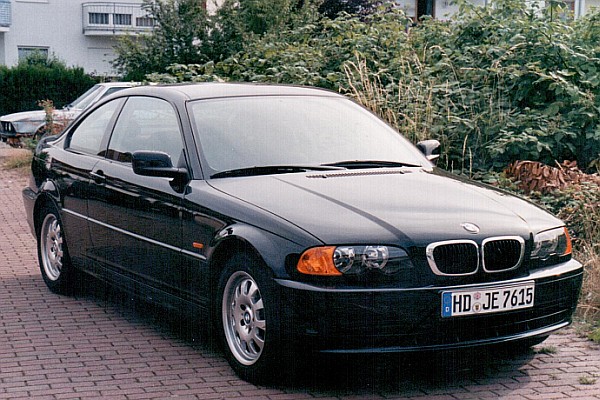
My first
SAP car, a BMW 318Ci, 2002
In September, I moved from a small apartment near Heidelberg to a large
apartment on the west bank of the Rhine, sharing a house with an SAP colleague.
Also in September 2002, I took time off work to attend the conference The Self:
From Soul to Brain, organized by the New York Academy of Sciences and held at
the Mount Sinai School of Medicine in New York. I wrote a
review of the
proceedings for the JCS.
In 2003, I started work as a Developer in SAP, now back in Walldorf, on
intelligent search and classification tools and technology, and on new ideas for
the Semantic Web.
In July 2003, I attended my next consciousness conference, Towards a Science of Consciousness: Between Phenomenology and Neuroscience, and
held in Prague, capital of the Czech Republic.
There I met Arthur Piper, who invited me to write a brief
essay for one of his
journals.
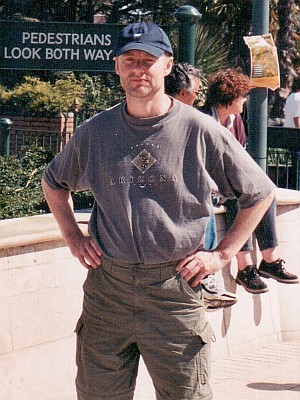
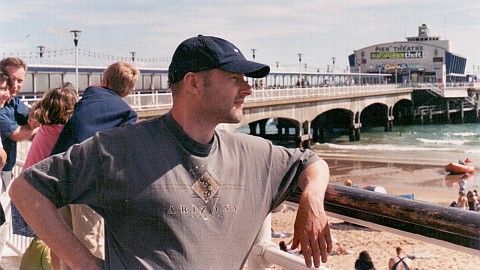
In Bournemouth, ca 2003
In September 2003, I went as an SAP delegate to the conference DC-2003 on Dublin
Core metadata held in Seattle. The conference program included a pleasant formal
dinner at Microsoft in Redmond.
In May 2004, I spent a week at a fine hotel in New York City, courtesy of SAP. A
colleague from my SAP team and I served as SAP delegates for the 13th World Wide
Web conference.
I exchanged a few words with Tim Berners-Lee.
In July 2004, SAP sent me on two more business trips. I traveled with two of my
colleagues from SAP Walldorf to the SAP Labs in Atlanta, Georgia, to deliver a
training course to our American colleagues on search technology. Two weeks
later, another SAP Walldorf colleague and I traveled to Sheffield, England, as
delegates to the 27th annual international ACM Special Interest Group conference
on research and development in information retrieval (SIGIR).
In August 2004, I reviewed Roger Penrose's new book The Road to Reality for the JCS.
 |
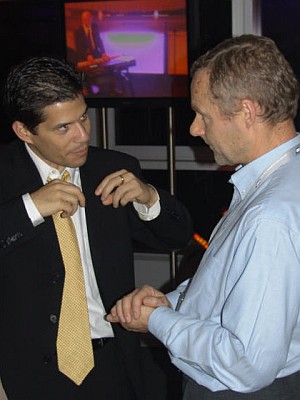 |
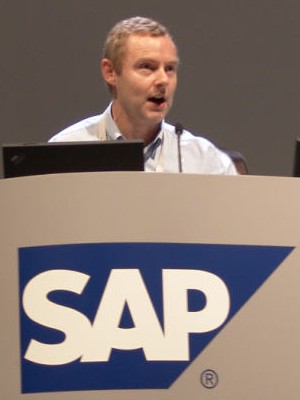
| At SAP University, October 2004 | With Shai Agassi, October 2004 |
In October 2004, I published my works on consciousness as an online book, Mindworlds.
In 2005, I worked hard for SAP on the introduction of my team's new flagship
product, which became known as the SAP NetWeaver Business Intelligence
Accelerator.
In 2006, I attended the ASSC 10 conference at St. Anne's College in Oxford.
This was a return to the college where I had taught philosophy
thirty years earlier. A conversion with Claude Pasquini that he related in his
conference report in the JCS prompted me to write another essay for the JCS:
Will robots see humans as dinosaurs?
Starting in 2006, I began to think about religion. I read Dan Dennett's book Breaking the Spell and then Sam Harris' polemical manifesto on religion,
The End of Faith.
From January 2007 to summer 2008, I blogged actively on the On Faith web forum
hosted by the Washington Post and Newsweek, and then on Sam Harris' own web
forum.
At the end of 2007, I wrote another JCS essay on the works of Ted Honderich and
Colin McGinn,
Hitting on Consciousness.
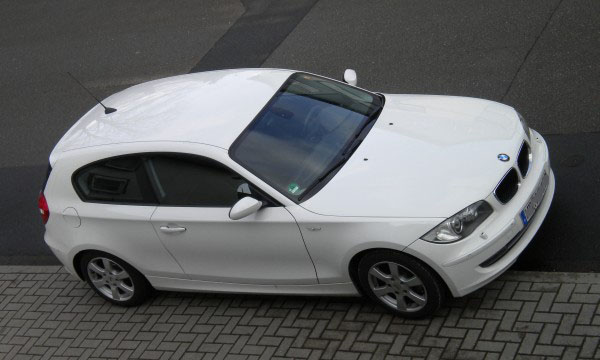
My second
SAP car, a BMW
120d, 2007
During these years, I also put real effort into my SAP work. In 2008, team colleague Gerhard Hill and I published a
paper, Reducing Outer Joins, in
the Springer VLDB journal. Later in 2008, I published my (third) book SAP NetWeaver BI Accelerator,
via SAP Press as volume 42 in their SAP Essentials
series.
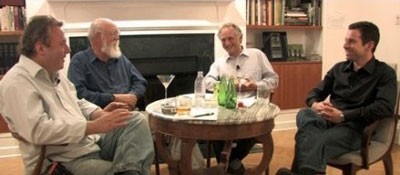
The "Four Horsemen" of the Atheocalypse (l to r):
Christopher Hitchens,
Daniel Dennett, Richard Dawkins, Sam Harris
In 2007 and 2008, I posted numerous comments related to the New Atheism on the website On Faith.
In early 2009, I packaged all my On Faith and Sam Harris forum posts into a book format
to serve as the rough draft for my (fourth) book Godblogs.
In early 2009, I prepared a thoroughly revised second edition of my (second) book
Mindworlds and arranged for its
publication by Imprint Academic.
In June 2009, I attended ASSC XIII in Berlin.
In late 2009, I helped SAP team colleagues prepare several technical papers
for publication.
2009-2011
Schwetzingen, Gemany
In November 2009, I celebrated my 60th birthday and retired from SAP.
In January 2010, my new book
Mindworlds became available from
Imprint Academic and
Amazon.
In 2010, I published the Ross International edition,
G.O.D. Is Great, of my book
on Globorg.
In 2011, I wrote my autobiography,
PHILOSOPHER.
I published it in January 2012.
Later in 2012, I published the Rover edition of my 1996 novel LIFEBALL.
Toward the end of 2012, I wrote CORAL.
I published it in March 2013.
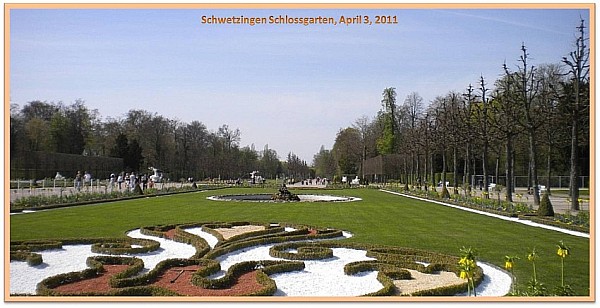
In June 2013, I moved back to the UK.
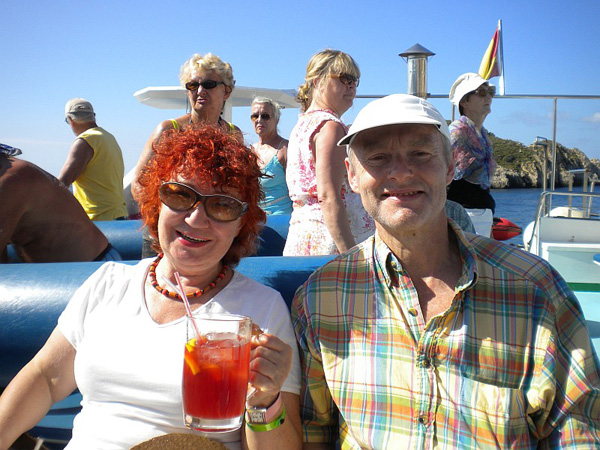
Vacation in Majorca with ethnologist Professor Dr. V. Krawczyk-Wasilewska, September 2013
Violetta and I collaborated on several academic papers and books.
A few vacation photos
In February 2014, my mother died.
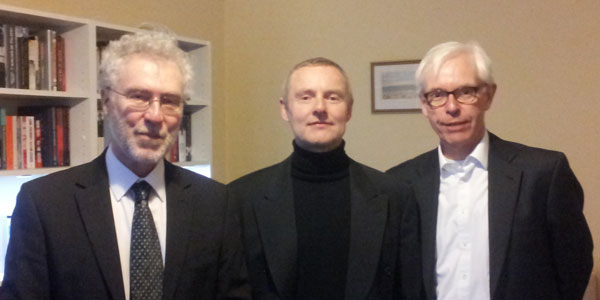
Graham, Andy, Steve, 2014-02-28
In June 2014, I started paid work for the Conservatives.
My years in the Conservative party: A photographic chronicle
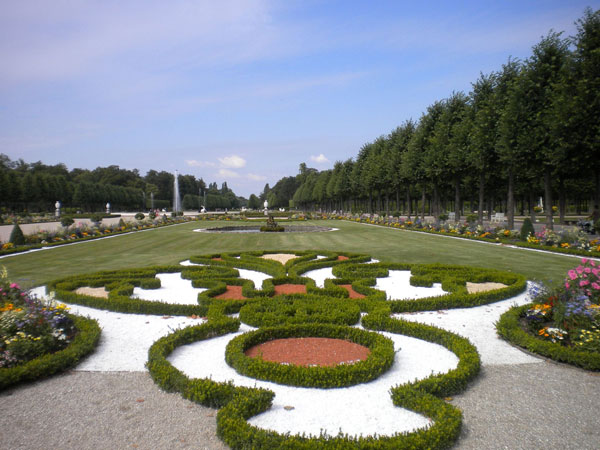
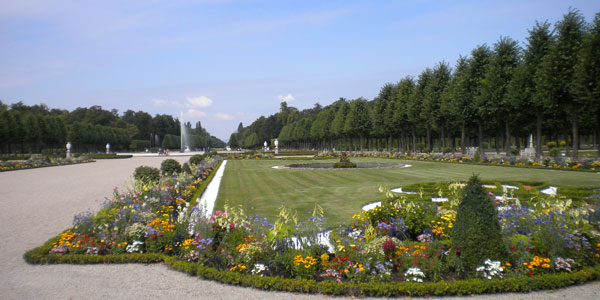
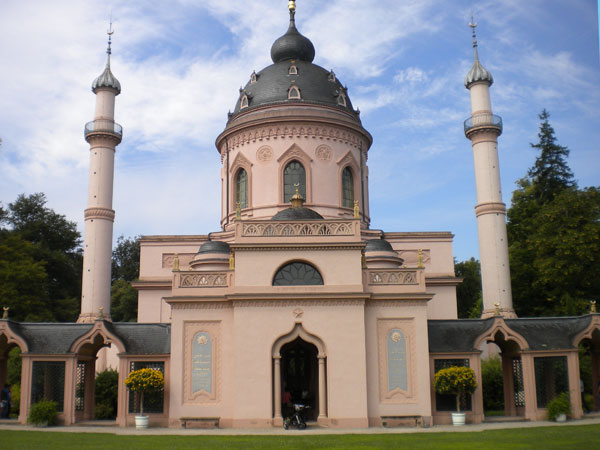
Schwetzingen Schlossgarten 2016-07-16
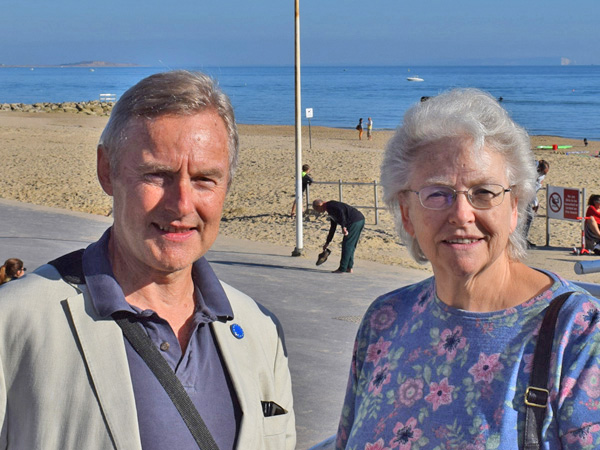
With my sister Helen, 2018-10-20
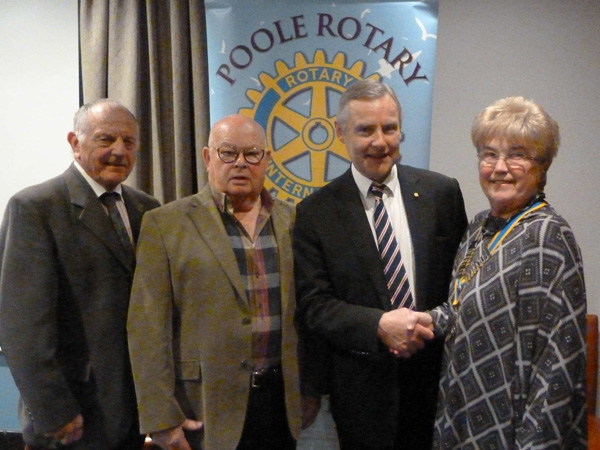
My induction into the Rotary Club of Poole, 2019-02-05
My time as a Poole Rotarian: A photographic chronicle
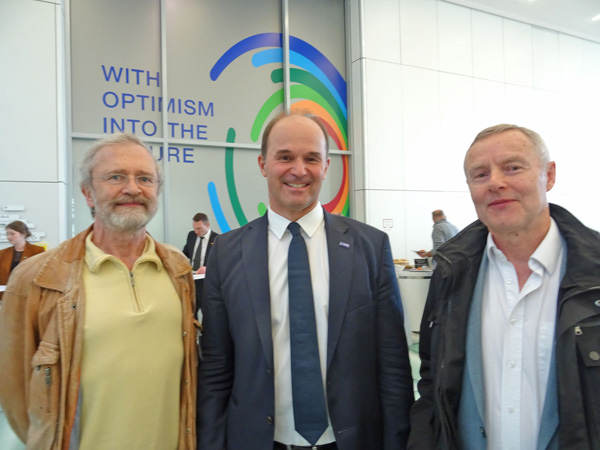
With Rolf Kickuth and BASF CEO Dr Martin Brudermüller, 2019-02-26
On September 11, 2019, I resigned as Parliamentary Assistant to Sir Robert Syms, MP for Poole,
following disaffection with HM Government policy on Brexit.
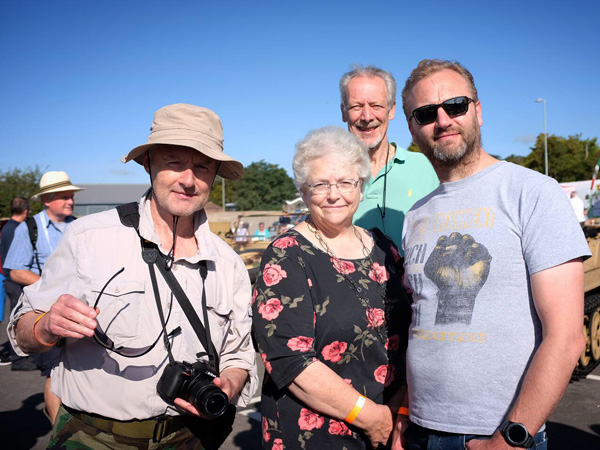
L2R: Me, my sister Helen, my bro-in-law Andrew, and Dane Dwight, all at Tiger Day,
Bovington Tank Museum, 2019-09-14 (photo courtesy Andrea Blood)
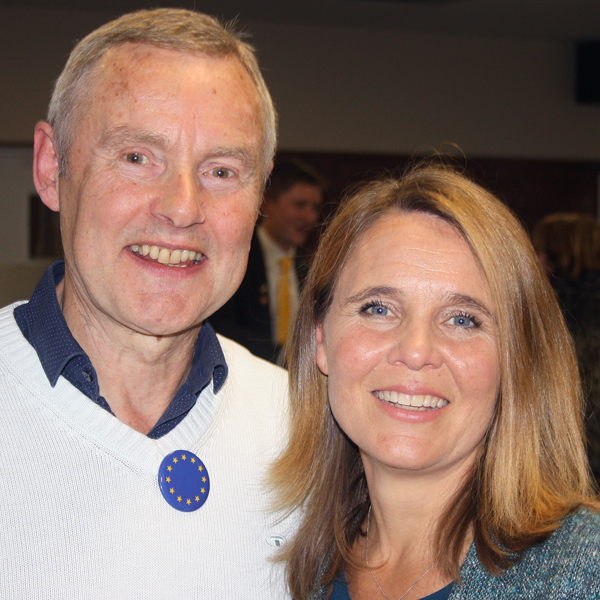
With Mid Dorset and North Poole Lib Dem prospective parliamentary candidate Vikki Slade,
2019-11-09
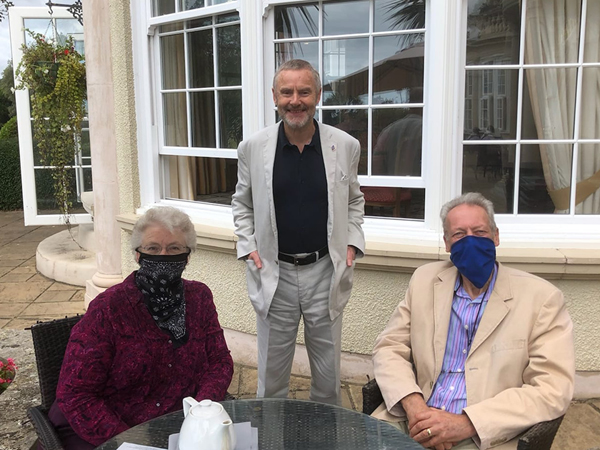
My sister, me, my brother-in-law, Bournemouth, 2020-08-23
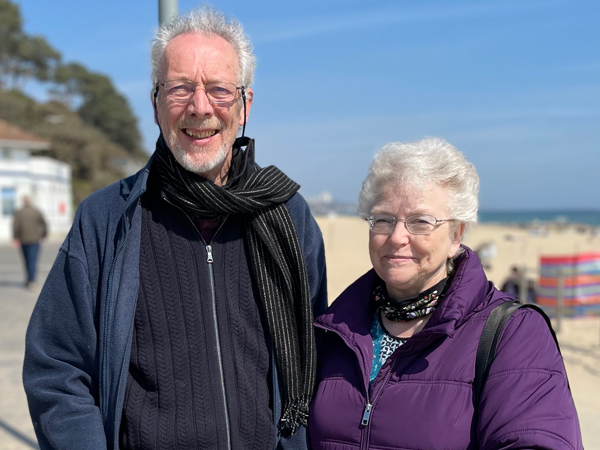
My brother-in-law and my sister, Branksome Chine, 2021-04-18
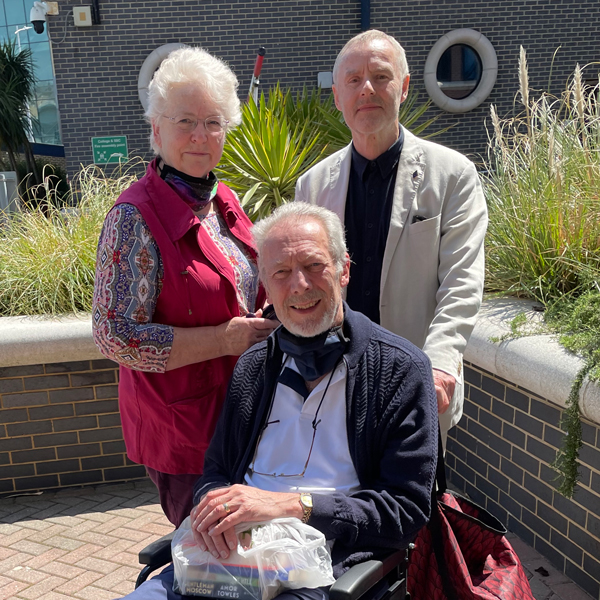
My sister, my brother-in-law (seated), me. RNLI, Poole, 2021-05-29
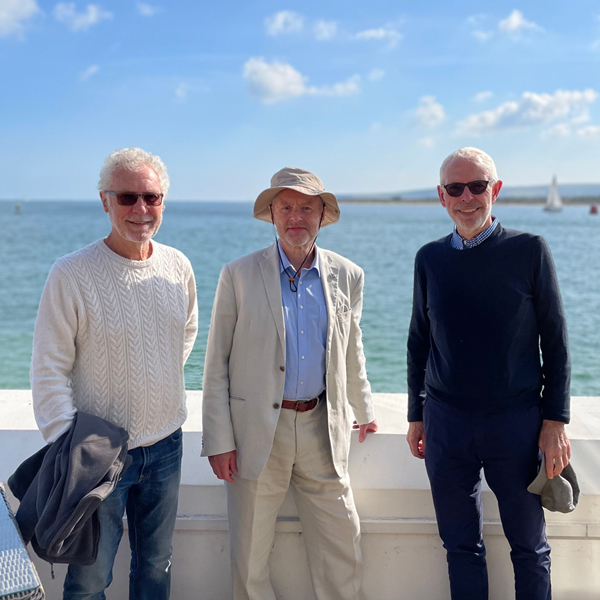
Graham, me, Steve, Haven Hotel, Sandbanks, 2021-09-22
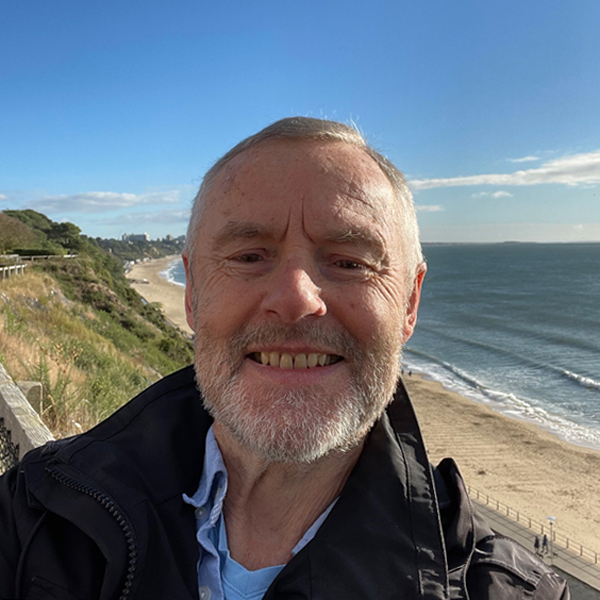
Me, Poole, 2021-10-05
Article about me in SAP World, December 2007
PDF: 2 pages, 105 KB
 |
 |